A personal blog about crushing equipment
Kamol Mirzaev on stone, crushers, and decisions that hold up in the real world.
I started learning about crushers when I had to choose equipment myself. Now I record what I would have wanted to know at the beginning.
Kamneblog.uz / manifesto
Do not stop at the data sheet — understand the conditions behind it.
Capacity never comes from a single row in a table. Rock, moisture, feed size, target fraction, wear, and the entire line all matter. This blog explains how those factors connect.
01 / INPUT
Three questions before choosing a crusher
- 01
What are we feeding?
Rock type, strength, abrasiveness, moisture, and maximum lump size.
- 02
What do we need out?
Target fractions, grain shape, and acceptable fines.
- 03
How will the line run?
Required output, operating pattern, screening, conveyors, and maintenance.
Narrated story · 8 min
How one impact crusher turned a list of questions into Kamneblog.uz.
Kamol began by comparing models. Then he learned that a sound choice starts with the material and the required product, not a model name.
Read article02 / PRINCIPLE
An impact crusher, without catalogue language.
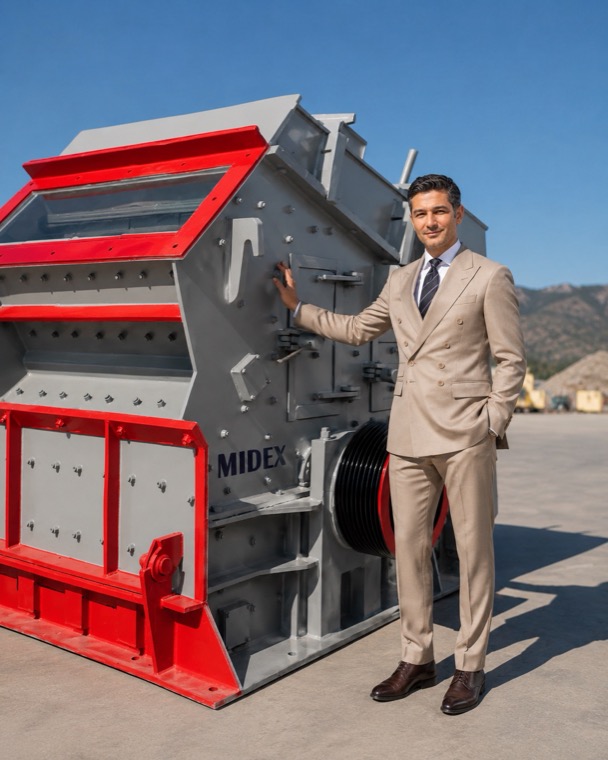
An impact crusher breaks material with a fast rotor and impact surfaces inside its housing. Its position in a line depends on the feed, target product, and process design. Adjusting working gaps can influence output size, but selection always starts with reliable material data.
Important: jaws and feed-opening dimensions belong to jaw crushers. Impact crushers use a different breaking principle.
04 / AUTHOR
I did not begin as a blogger. I began with one question: which crusher should I choose?
Kamol Mirzaev is the author of Kamneblog.uz. Together with MIDEX Profi team, he explains crushing equipment in plain language and separates general principles from official specifications.
Kamneblog.uz is a corporate editorial project of MIDEX. Kamol Mirzaev is the author; MIDEX reviews the technical material.
Meet Kamol